Agency Is an Effective Truth
As I mentioned in my previous post, Ryan Holiday's Courage is Calling is divided into three sections:
- Fear
- Courage
- The Heroic
This post focuses on fear, and more specifically, focuses on an idea that Holiday presents in two (short) chapters of the first section:
- Agency is an effective truth
- We are afraid to believe
Now, those of you who are trained in Trust-Based Relational Intervention™ (TBRI™) are well-versed in the developmental neuroscience of fear and trauma (as described, for example, in Bessel van Der Kolk's The Body Keeps the Score, Viking, 2014). A core function or goal of TBRI™ is to promote a sense of felt-safety, which is an antidote to fear and fear-driven behaviors (see The Connected Child, McGraw-Hill, 2007). A closely related construct is psychological safety, where the focus is on felt-safety in the workplace (see https://amycedmondson.com/psychological-safety/).
Now, the journey from fear and fear-driven behaviors, to courage and confidence-driven behaviors, especially in regards to close relationships, has been a major aspect of my own personal journey from childhood to adulthood. This aspect of my personal journey has been crucially important to my wellbeing, but it is not – I believe – what is behind my recent "descent into the belly of the beast," as described in my recent blog posts. I believe there are other dynamics involved, and I believe Holiday touches on these dynamics in the two chapters listed just above. I also believe that these dynamics are relevant to many, if not most, of the children, families, and adults that we serve.
An "Effective Truth" is something that is true and makes a difference. For example, TBRI™ is gr0unded in the effective truth that if we can help a child feel safe, we can begin to help them replace their fear-based behaviors (e.g., aggression) with confidence-based behaviors (e.g., cooperation). For Wendell Berry, solving for pattern is grounded in the effective truth that "good solutions" depend on an understanding that the goal must always be system health. In his book Courage is Calling, Ryan Holiday argues that agency is an effective truth, in large part because agency is the foundation for courage and all of its correlates: confidence, curiosity, creativity, connectedness (see Richard Schwartz, No Bad Parts, Sounds True Publishers, 2021, p. 93). For those of you who are familiar with Mary Ainsworth's Strange Situation, you may have noticed that the infant's agency reveals itself in their secure base behaviors (e.g., exploration) and in their reunion behaviors (e.g., proximity seeking, contact maintaining).
In the second of the two chapters listed above – We are afraid to believe – Ryan Holiday makes an important point (pp. 46-47):
Scholars remind us that the opposite of andreia – the ancient Greek word for "courage" – is not cowardice. It's melancholia. Courge is honest commitment to noble ideals. The opposite of courage is not, as some argue, being afraid. It's apathy. It's disenchantment. It's despair. It's throwing up your hands and saying, "What's the point anyway?"
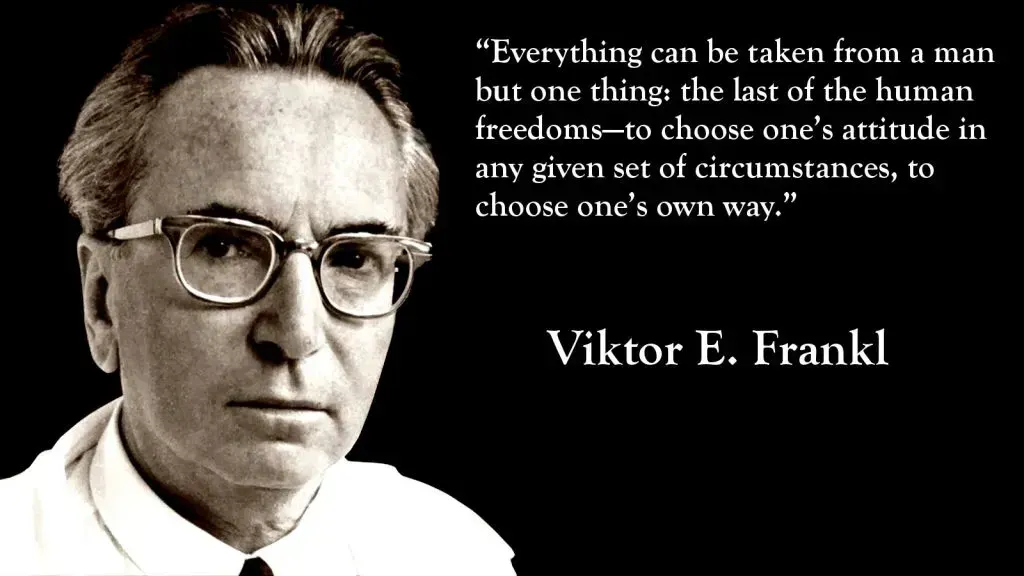
In closing, I would argue three things: First, that the root of the "dropping out" that I seek to understand in my own behavior (see the previous four posts) is in some way related to this sense of despair – this melancholia. Second, that the sense of despair that attachment researchers have observed among insecure – especially disorganized – infants and toddlers is related to the sense of despair described by Ryan Holiday (and Viktor Frankl). Third, that even among "Earned Secure" adults, such as myself, there remains a residual of this despair that can weaken courage, at least in some circumstances.
For those of you who are familiar with Cultural-Historical Activity Theory (CHAT), it is important to note that agency has a central role in the theory. According to Engestrom, the "argumentative grammar" of the theory has four tenets:
- Activity systems are the unit of analysis (the triangle diagrams);
- Contradictions are key sources of change and development;
- Agency is an essential layer of causality;
- Transformation of practice is a process of expansive concept formation (expansive learning cycles).
See, for example, Yrjo Engestrom, Studies in Expansive Learning, Cambridge, 2016, ch. 10.