Greatness
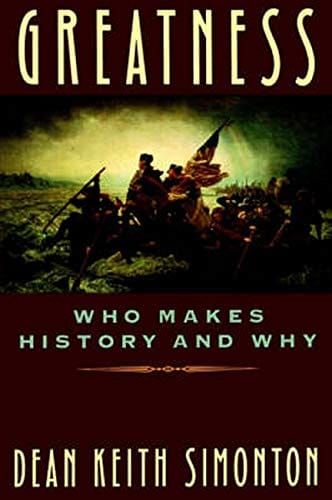
During the 1990s and early 2000s I taught courses on leadership and creativity, and one of the texts I used was Dean Keith Simonton's Greatness: Who Makes History and Why. Events of the past week, especially the losses of Dolly Parton and Wendell Berry, have gotten me thinking about Greatness once again, and so I thought I would share a short post to honor their passing.
Dolly Parton
As many of you know, I am an avid reader of The New York Times, which published a number of excellent articles about Dolly and her impressive achievements. Perhaps my favorite among these was "Loving Dolly Was Easy. Understanding Her Was Hard," by Tressie McMillan Cottom (August 27, 2026). But the one I wish to quote for this blog post was written by David French: "What Dolly Did for Tennessee Is What She Did for the World" (August 30, 2026). In this article David French shares how his family was impacted by Dolly's generosity, and then he writes:
Dolly might have been the most beloved living American, but in Tennessee she was something different. In this state, she meant more. One of my students, a young woman, said "This is what it must have been what it was like when the Queen died." And she was not alone.
I wasn't in London when Queen Elizabeth II died, so I can't know, but when my student said that, I knew what she meant. Dolly's death was a seismic emotional moment.
It's not because she was famous and successful and this was her home. Nashville is used to fame. And it's not because she never forgot her roots. A central theme of country music is "Don't forget your roots."
It's because she loved us. Unconditionally. Extravagantly.
When I read that paragraph, I immediately thought of another Great One, Dr. Karyn Purvis, who died 10 years ago, in 2016. When asked what she wanted people to remember about her, Karyn said she wanted people to know that She loved extravagantly.
And then I remembered that I had written about fear, love, and courage in the series of posts based on Ryan Holidays books – see solving-for-pattern.ghost.io/agency-is-an-effective-truth/ and the three posts following that one. The two main points of those blog posts were (1) apathy, not fear, is the opposite of courage, and (2) love is the wellspring for courage. Perhaps extravagant love is the wellspring for extravagant courage?
Wendell Berry
In addition to articles about Dolly Parton, The New York Times also published an extensive obituary for Wendell Berry, written by Robert D. McFadden, and published on August 31, 2026. Of course everyone reading this blog – Solving for Pattern – is already familiar with Wendell Berry and his ideas, so I would just like to quote two paragraphs from McFadden's obituary:
Lanky and rawboned in middle age, with melancholy eyes, a jutting chin and a widow's peak reminiscent of Lincoln's, Mr. Berry wrote more than 50 volumes of poetry, fiction, and argument that championed small family farms, the environment, local foods and interdependent communities, and railed against chemicals, most technologies, agribusiness and distant government.
"The national economy that is really run for the benefit of a very few people is preying upon and slowly destroying local communities everywhere," Mr. Berry told Sierra magazine in 1990. "Everything we produce in rural America makes more money for other people than it does for those who produce it. We're destroying rural America."