Being Outside
In my previous post – Solving for Pattern Redux – I shared two lists, one of which was from the Neuroscience & Wellness Substack article (September 13, 2025), "Non-Negotiable Habits as a Neuroscientist":
- Move before the world wakes up
- Hydrate, hydrate, hydrate
- Sunshine every single day (get outside)
- Travel to learn, not just to escape (be curious)
- Whole foods, whole brain
- Smile first, science later (think mirror neurons)
- Reset Mondays (start with a clean slate)
- The to-do list (short and sweet)
Before going ahead with my stated plan to review my absence and return to blogging, I would like in this post to focus on the third of these bullets: "Sunshine every single day (get outside)." What prompted me to take this detour was an article from Outside magazine that our daughter sent to us:
 Stephanie Pearson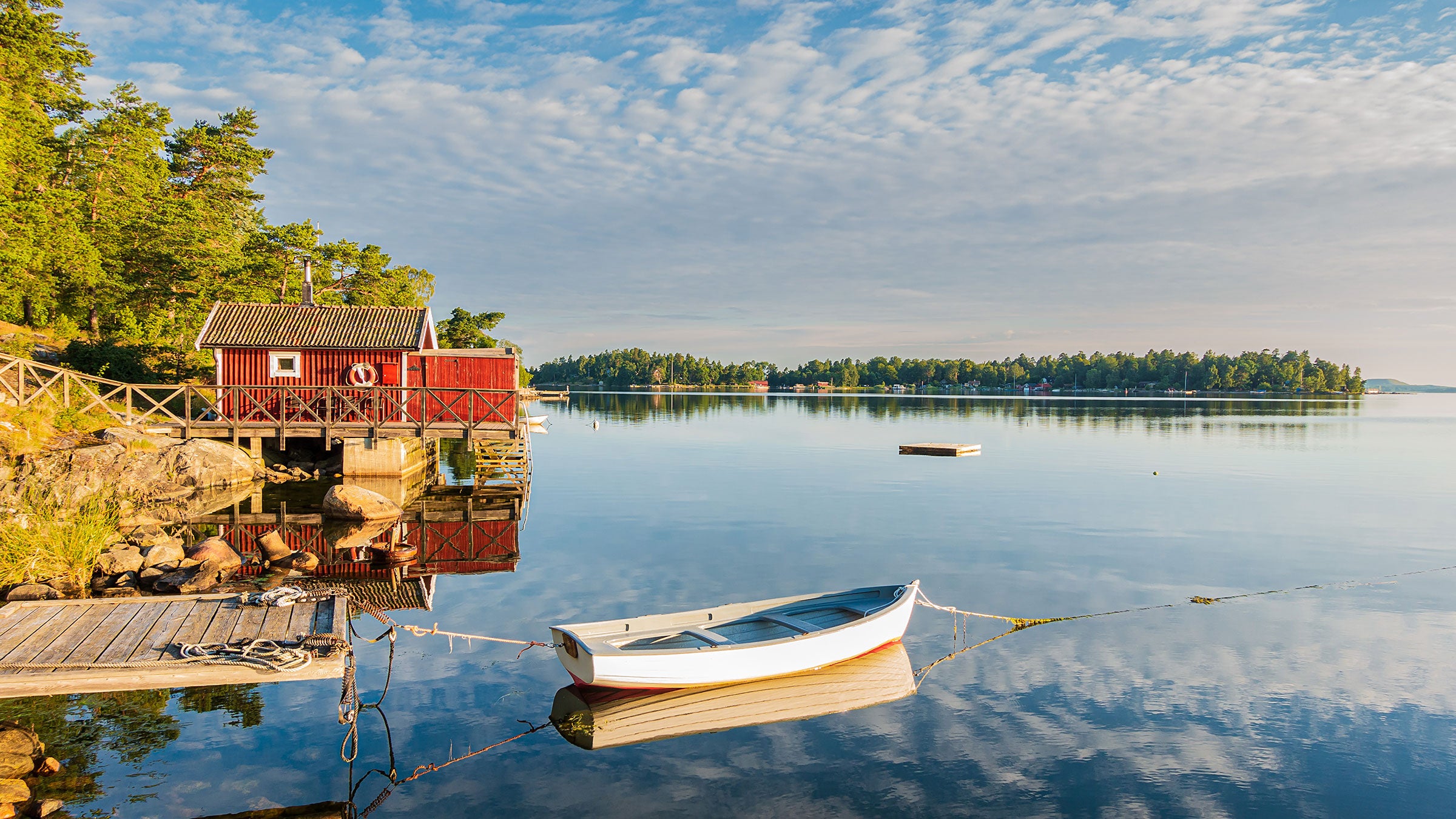
(This is a bookmark, not a link -- search for the title and you will find the article.)
The author of the article, Stephanie Pearson, is a Minnesota native with deep family roots in Sweden (which is true of many Minnesotans – something you would well know if you ever listened to Garrison Keillor's "A Prairie Home Companion," as our family did regularly when we were living in Ann Arbor). Pearson's explorations of her ancestral home are what prompted her to write this article, which I highly recommend you take the time to read. The article illustrates Solving for Pattern on a national scale, and I have no doubt but that Wendell Berry would approve. Here is one paragraph from the article which mentions two principles that guide the Swedish way of living:
That definition [of "outdoor life"] reminds me a lot of the way I grew up in northern Minnesota. My parents’ need to be outside was embedded in their DNA. They had naturally lived by two Scandinavian principles: “Friluftsliv,” (a term that originated with Norwegian playwright Henrik Ibsen when Norway was part of the United Kingdoms of Sweden and Norway), which literally means “Free-Air-Life;” and “lagom är bäst” a Swedish parable that means “enough is as good as a feast.”
Whereas Stephanie Pearson has describes how Swedes (and their descendants on the Great Plains) live according to these two principles, Dr. Deborah Rhea has shown us one approach to bringing the out-of-doors to our schools. Debbie is a professor in the TCU School of Education, who has developed a program called LiNK that gets kids outside to improve outcomes (see https://liinkproject.tcu.edu/our-team/dr-debbie-rhea); she has also written a book that describes the rationale for the program (Wrong Turns, Right Moves in Education, Archway Publishing, 2019). Not coincidentally, the inspiration for Debbie's work was a trip she took to Finland, with goal of trying to figure out why Finnish schools were the best in the world. As it turns out, the Finns are kindred spirits of the Swedes.