Discipline is Destiny
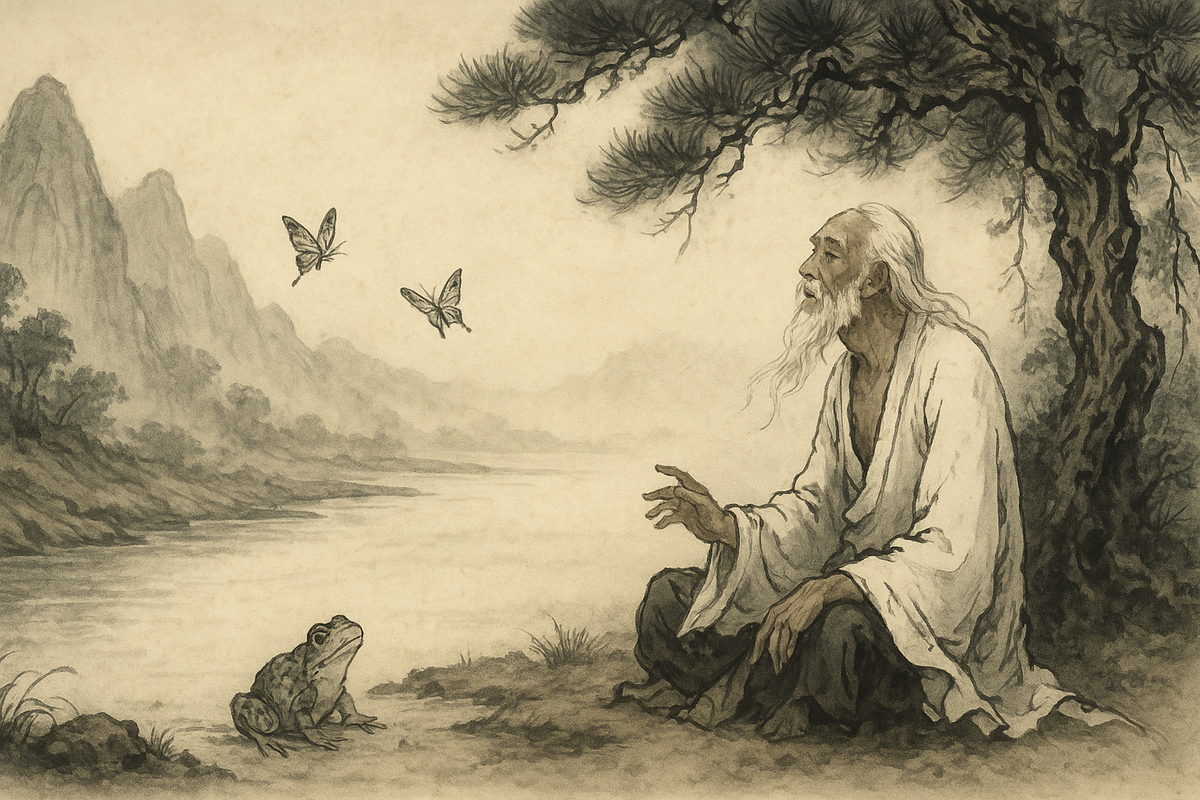
If you have been following this blog, then you will know that for past half-dozen or so posts I have been reporting on a self-guided journey towards regaining the self-discipline that I had lost in six or so months. I had framed this journey both as the "Hero's Journey" (https://www.jcf.org) and as "Solving for Pattern" (https://berrycenter.org). Actually, this journey has not been entirely self-guided, for I have relied at least somewhat on Ryan Holiday, and his book, Courage is Calling (Portfolio, 2021). In the three posts previous to the current one, I worked through the three sections of Courage is Calling:
- Fear
- Courage
- The Heroic
My original plan was, first, to work through Courage is Calling, and then, second, to work through Discipline is Destiny (Portfolio, 2022). I had come to believe that courage is, in some sense, a prerequisite for discipline – at least in my particular case. What has happened is – for reasons that are a bit of a mystery – that I have now regained my self-discipline, before even digging into Discipline is Destiny. So, I am going to make this the last post on my journey, before returning to what I see as the main purpose of this blog, which is to explore various aspects and applications of Berry's essay, "Solving for Pattern."
At one point in the introduction to Discipline is Destiny, Ryan Holiday states that
Freedom requires discipline. Discipline gives us freedom.
These two lines brought to mind (for me), the core message of the Zhuangzi (see footnote):
Many interpreters will agree that the Zhuangzi is concerned with freedom. Since idea of a "fit" [between one's actions and the current situation] implies a reciprocal interrelation between the various components of a situation, freedom in this sense is constituted by lack of constraints which might inhibit a natural response. Usually, these constraints take the form of the burden of convention, expectation, and social artifice. Therefore freedom does not necessarily imply the freedom to do whatever we want. One must acknowledge and accommodate the real inevitabilities and limitations one encounters. This is because one cannot force the "fit," one must rather find it, which means meeting the world at least halfway.
Or, in the words A. S. Neill, Freedom – Not License! (Hart, 1966). Discipline is required both in the preparation to act (which might take a lifetime), and in the moment of action – discipline makes it possible to find the fit which is most "natural." Or, as Wendell Berry might say, the most conducive to health.
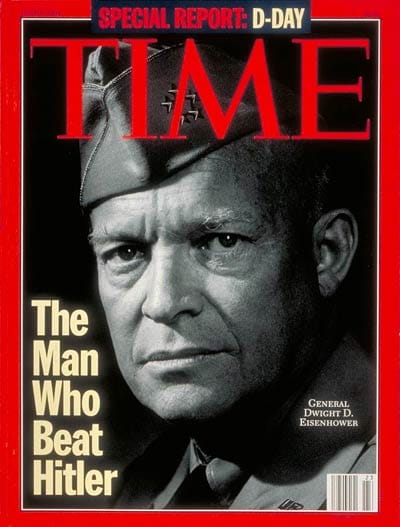
Now, I would like to close out this post (and this series of blog posts), with a lengthy quote from Ryan Holiday's Discipline is Destiny (pp. xxii-xxiii):
Let us go back to Eisenhower and his idea that freedom is the opportunity for self-discipline. Does his own life not prove this? He plodded through some thirty years of unglamorous military postings before earning the rank of general and had to watch, stateside, as his colleagues won medals and acclaim on the battlefield. In 1944, when he was appointed Supreme Commander of the Allied forces in World War II, he suddenly controlled an army of some three million men, the tip of a war effort that ultimately involved more than fifty million people. There, at the head of an alliance of nations totaling upward of seven hundred million citizens, he discovered that far from being exempt from the rules, he had to be stricter with himself than ever. He came to find that the best way to lead was not by force or fiat, but through persuasion, through compromise, through patience, by controlling his temper, and, most of all, by example.
Emerging from the war, he was a victor of victors, having achieved conquest at a level no man-at-arms ever has or hopefully will ever again. Then, as president, overseeing a newfound arsenal of nuclear weapons, he was literally the most powerful human being in the world. There was almost no one or nothing that could tell him what to do, nothing that could stop him, no one who did not look up at him in admiration or away from him in fear. Yet his presidency involved no new wars, no use of those horrible weapons, no escalation of conflict, and he left office with prescient warnings about the machinery that creates war, the so-called military-industrial complex. Indeed, Eisenhower's most notable use of force in office came when he sent the 101st Airborne Division to protect a group of black children on their way to school for the first time.
Fox, A. (2003). Reflex and reflectivity: Wuwei in the Zhuangzi. In S. Cook (Ed.), Hiding the world in the world: Uneven discourses on the Zhuangzi. State University of New York Press.